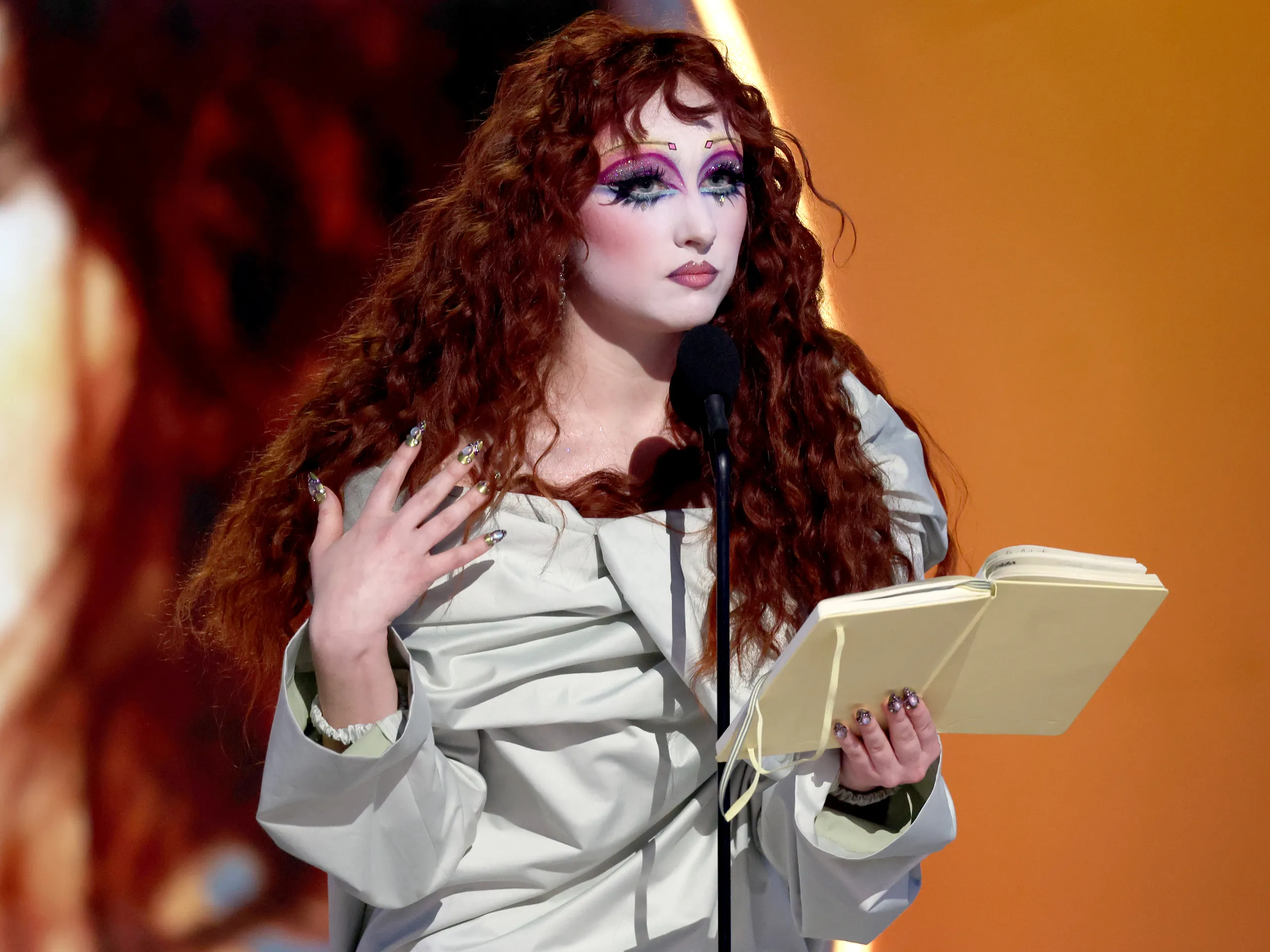
Chappell Roan’s interviews since her 2024 breakout stand out for how directly she’s pushed back on the expectation that newly famous artists should simply be grateful for attention. She’s spoken repeatedly about feeling ambushed by strangers recognizing her in public, and has been unusually explicit that fans are not entitled to her time, physical space, or personal information simply because they enjoy her music — a boundary-setting stance that’s generated its own wave of coverage separate from her music.
She’s also discussed, in multiple interviews, the years of major-label rejection that preceded her breakout, framing that period less as a failure and more as the reason she was able to build a fully formed artistic identity — the drag-influenced visual style, the theatrical live show — before an audience arrived to judge it. That contrast between years of relative obscurity and sudden, overwhelming attention has been a consistent thread in how she talks about her own timeline.
On stardom itself, she’s been candid about the specific anxiety of having her sexuality and personal life treated as public property once she reached a certain level of visibility, and has used interviews to draw clear distinctions between what she’s willing to discuss and what she considers off-limits, regardless of how much attention a topic might generate.
Taken together, her interview persona has become almost as widely discussed as her music: an artist using press access specifically to renegotiate the terms of her own fame in real time, rather than accepting the usual script.