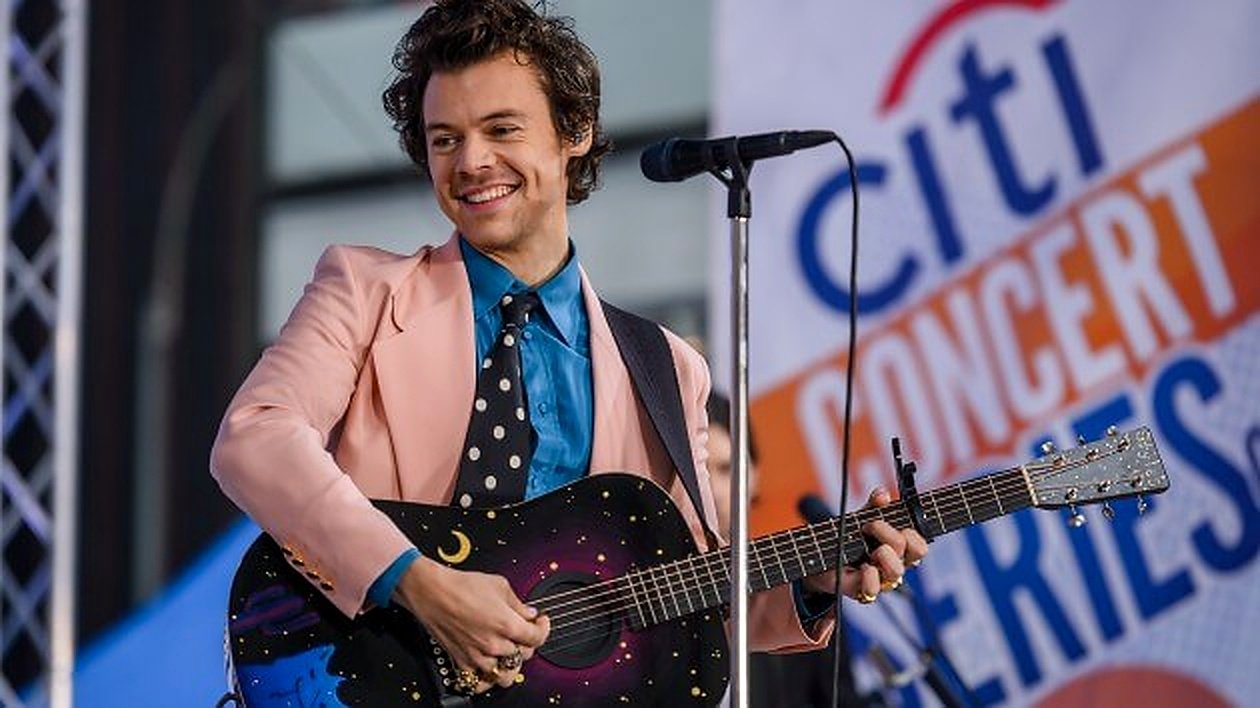
Leaving a boy band is one of the riskiest moves in pop music, and Harry Styles’ solo career started by deliberately avoiding the sound that made him famous. His 2017 self-titled debut leaned heavily into 1970s rock influences — Bowie, Fleetwood Mac, early Elton John — a sharp left turn from One Direction’s pop-rock, and one clearly designed to be taken seriously as a solo artistic statement rather than a continuation of a boy-band brand.
Fine Line (2019) softened that classic-rock leaning into something more radio-friendly without abandoning it, and “Watermelon Sugar” became the song that fully cemented him as a genuine solo pop force rather than a former boy-band member coasting on name recognition. By the time Harry’s House arrived in 2022, he’d found a sound that was distinctly his own — warm, funk-inflected pop that didn’t need to reference any prior era to justify itself — and “As It Was” became one of the biggest singles of the year.
The music has always run alongside a deliberate fashion strategy: gender-fluid, often flamboyant tailoring, frequently in collaboration with high-fashion houses, that made him as much a fixture of style coverage as music coverage. That crossover into fashion, paired with a run of acting roles, has made his public identity broader than “former boy-band member turned solo artist” — a transition many of his peers from the same era have struggled to make.
What makes his solo career a useful case study is the pacing: three albums in six years, each a clear step rather than a repeat, released alongside a fashion identity built with the same deliberateness as the music. Few artists have managed to leave a boy band and be taken as seriously, as quickly, as he was.