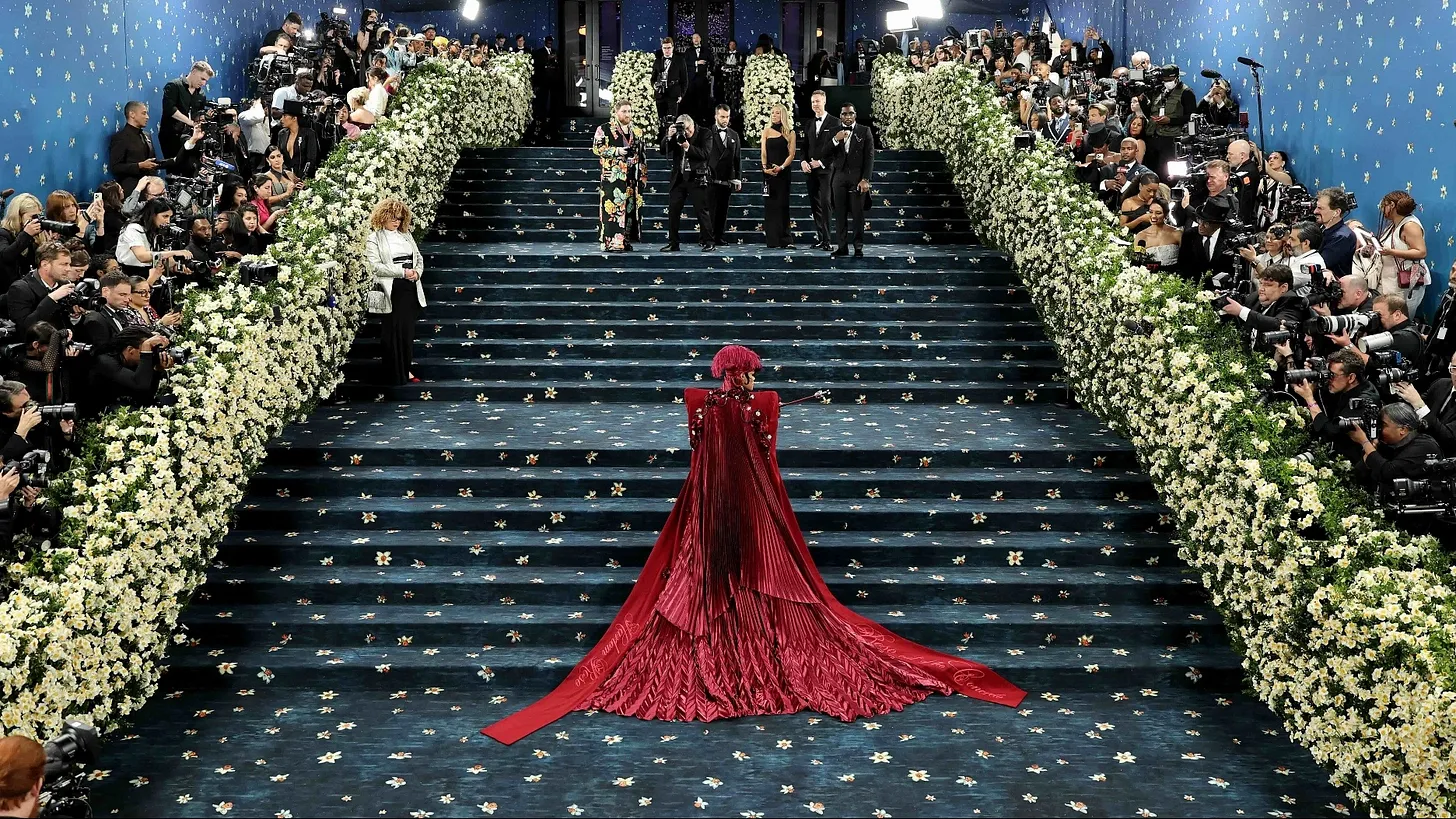
The Met Gala’s official purpose — raising funds for the Metropolitan Museum of Art’s Costume Institute — is often overshadowed by its function as a broader cultural event, one that generates days of anticipation, live commentary, and post-event analysis disproportionate to its actual scale as a single evening fundraiser. That gap between its formal purpose and its cultural footprint is itself worth examining.
Each year’s theme functions less like a simple dress code and more like a prompt that shapes weeks of pre-event media coverage, speculation about which celebrities will attend, and detailed historical or cultural context pieces explaining the theme’s references — turning a single night into an extended cultural conversation rather than a one-time spectacle.
The event has also become a barometer of sorts for which celebrities are considered culturally significant in a given year: an invitation, and more specifically the guest list’s composition, is treated as a meaningful signal about industry standing, independent of any specific outfit worn. Notable absences generate nearly as much discussion as notable arrivals, reinforcing the event’s role as a kind of annual cultural census of who currently matters.
Beyond fashion coverage specifically, the Met Gala has become a recurring subject for broader cultural criticism, particularly around wealth display and museum fundraising models, giving the event a layer of ongoing public debate that extends well past whether a given look succeeded aesthetically.