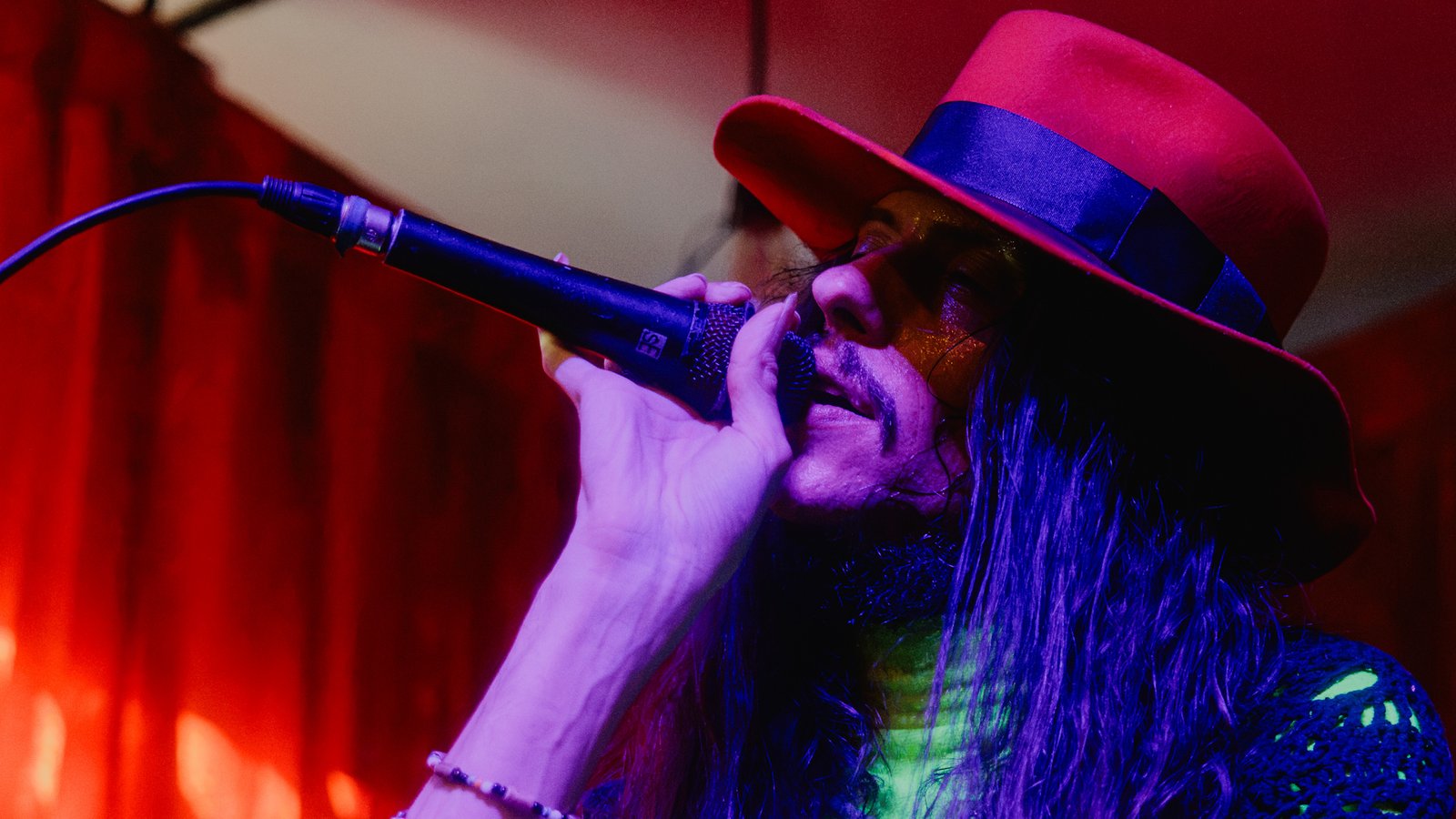
Often, the words come first, the voice delivers them, and the music, if there is any, tends to arrive around the edges.
Msb Mario “El Niño de la Pili” starts somewhere less defined.
His work is built around the voice, but it is shaped by much more than delivery. Rhythm, pauses, phrasing and sound all influence where a piece goes. Something that reads one way on the page can take on a completely different character when it is spoken aloud. A pause can carry its own weight. A repeated phrase can begin to function almost like a hook.
The words are only one part of the process.
Listening to the writing
That becomes clear in the way Mario approaches music.
Spoken word sits alongside Spanish guitar, electronic textures, vocal effects and live production. None of these elements feels simply placed underneath a finished text. They create space, pace and movement around the voice.
Sometimes there is very little between the listener and the words. Elsewhere, rhythm takes over and the performance becomes much more physical.
The result is difficult to fit into neat categories.
You stop wondering where the poem ends and the song begins, and start listening instead to how the different elements work together.
“Chela Chele”
“Chela Chele” is a useful place to hear that approach.
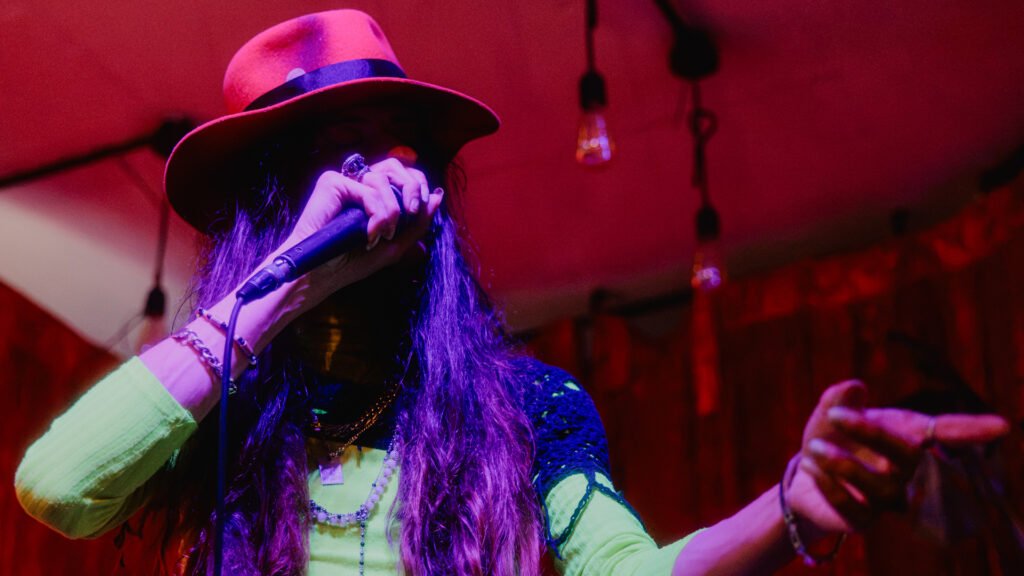
There is clearly a written piece underneath it, but the track makes it difficult to imagine that text existing independently from its delivery. Repetition, timing and vocal movement carry as much weight as the words themselves.
The voice does not simply sit over a backing track. Its rhythm helps shape the arrangement.
That makes the usual description of “spoken word with music” feel a little too simple.
The music isn’t there to illustrate the writing. It is part of how the writing works.
The live version changes again
The difference becomes even clearer on stage.
A recording can be controlled down to the smallest detail. A room can’t. The audience brings its own energy, the space affects the sound, and the timing of a performance can shift with what is happening in front of the artist.
For Mario, a piece can depend so much on the performance that it cannot remain exactly the same when it moves from one room to another. The audience becomes part of the rhythm. The space affects the performance.
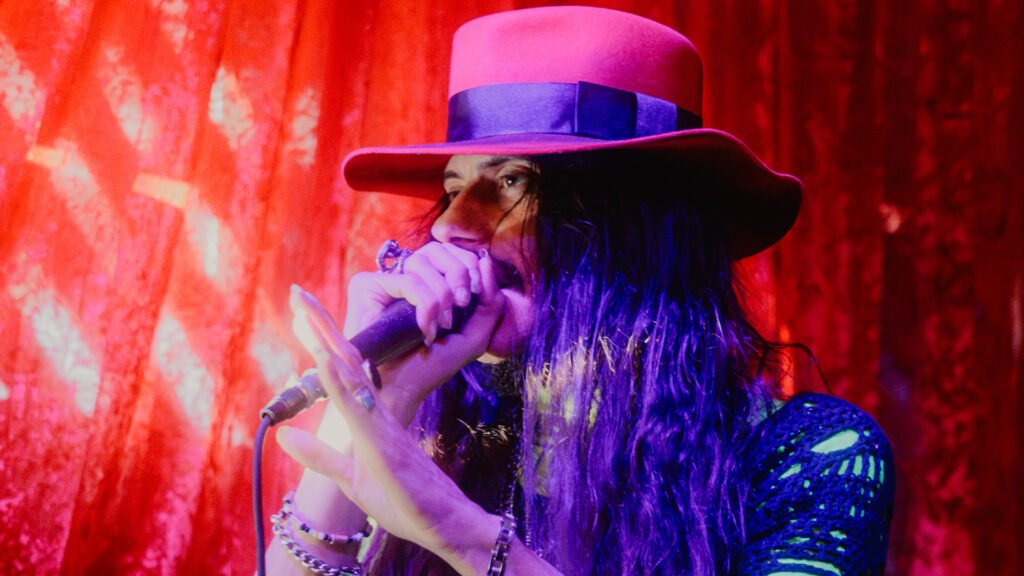
“El Niño de la Pili” has been developing the project through live performance in Spain and internationally, including his first UK tour in 2026, with shows in London, Newcastle, Brighton and Leeds.
This is where the Spanish artist has shown how the performance can change the material with it.
Still finding its shape
There is something interesting about a project that is still finding its shape.
Mario’s work doesn’t seem particularly interested in deciding whether it belongs in one category or the other. The writing can lead to the music, the music can influence the writing, and the live performance can alter both again.
Trying to pin the project down to a single genre therefore feels less useful than simply listening to what it is doing.
The question, then, is less about whether spoken word can become music. It is already happening. The more interesting part is what happens when the two are treated as part of the same creative process from the beginning.
For Mario, it seems to start with the voice.