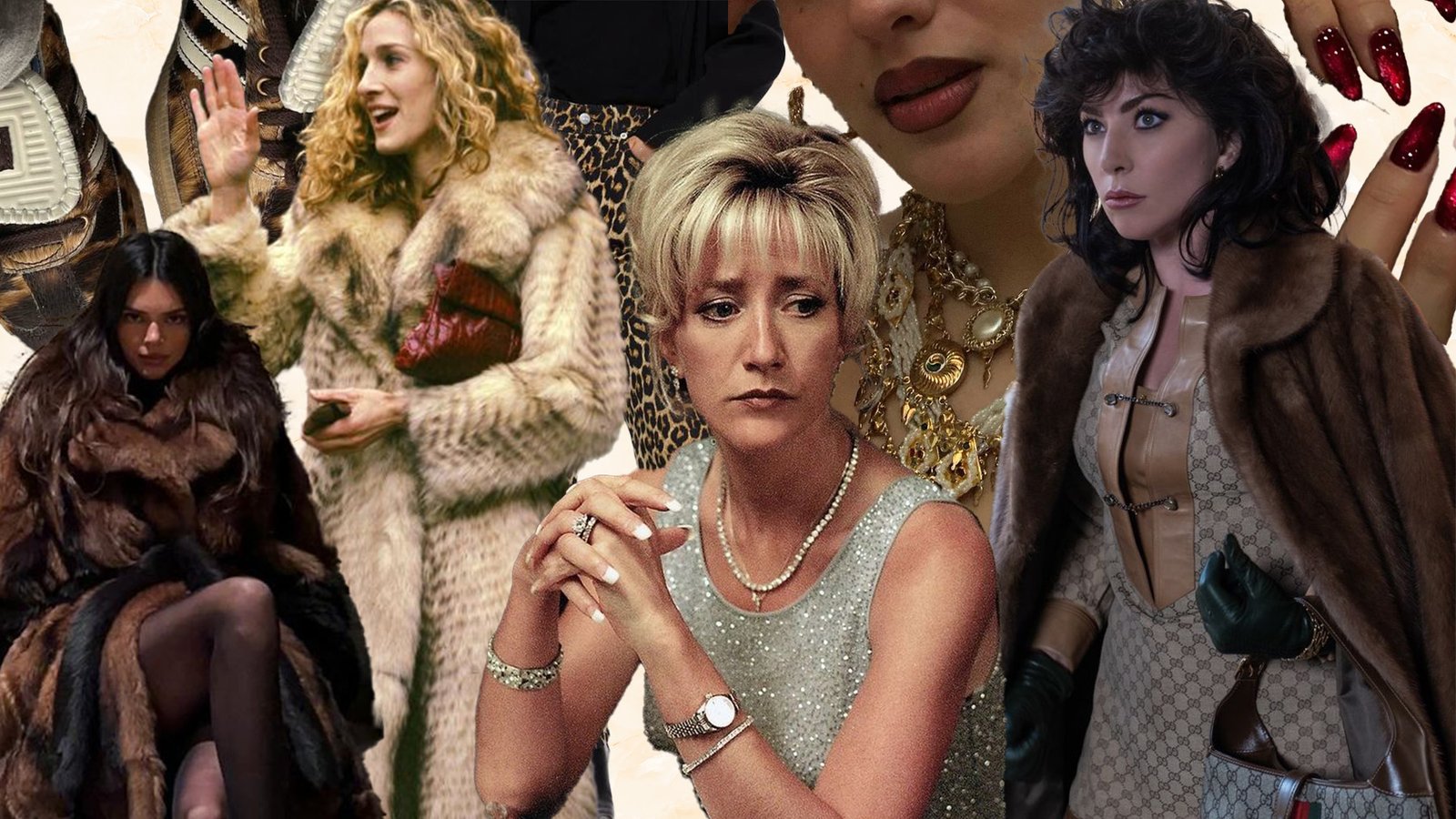
The “mob wife aesthetic” trend draws its visual vocabulary directly from film and television depictions of organized-crime family life — oversized fur coats, dark sunglasses, gold jewelry, and a generally glamorous, unapologetically maximalist styling approach — repackaged as an internet-native fashion trend rather than a costume reference. The label itself emerged largely through social media rather than any single celebrity’s styling choice, spreading as a recognizable shorthand before any specific outfit became the trend’s defining image.
Part of the trend’s appeal lies in its explicit contrast with the quiet luxury aesthetic that had dominated celebrity style discussion just before it: where quiet luxury emphasized restraint and understatement, the mob wife aesthetic celebrated visible glamour and unapologetic maximalism, giving stylists and everyday dressers alike a clear alternative mood to work with once the quieter trend had run its course.
Celebrities and influencers who adopted the look leaned into the theatrical, slightly campy framing rather than treating it as a serious style category, which helped the trend spread quickly as a fun, easily identifiable costume-adjacent aesthetic rather than requiring genuine investment in expensive pieces — faux fur and costume jewelry versions circulated just as widely as any luxury interpretation.
Like most aesthetic-label trends, its cultural lifespan followed a familiar pattern: an intense initial spike in coverage and adoption, followed by a gradual fade as the internet’s aesthetic-naming cycle moved on to its next label, though elements of the look — statement sunglasses, bold jewelry — have persisted in broader styling well past the trend’s peak.