Album cover art has produced some of music’s most immediately recognizable visual shorthand, often outliving the specific commercial context of the record itself to become standalone cultural symbols. Pink Floyd’s prism artwork for The Dark Side of the Moon remains one of the most reproduced images in music merchandising history, largely because its simple, abstract geometry translates easily across formats without needing any context about the album itself to remain visually striking.
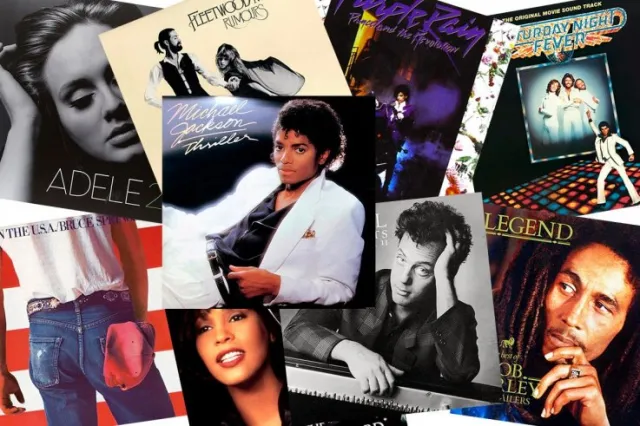
Michael Jackson’s Thriller cover, with its now-iconic white suit and confident direct gaze, functions as much as a portrait of a specific cultural moment — pop music’s biggest possible commercial ambition, fully realized — as it does a piece of standalone design. Similarly, Nirvana’s Nevermind cover has remained culturally potent decades after release, its unsettling swimming-baby imagery frequently referenced and parodied well outside music contexts entirely.
More recent covers have continued the tradition of using striking, sometimes deliberately provocative imagery to signal an album’s tone before a single song is heard: stark, minimalist typography-driven covers have become a recognizable design language of their own for certain contemporary pop releases, functioning almost as a genre signal in the way certain color palettes or fonts now read as specifically pop, specifically alternative, or specifically hip-hop to audiences without needing further explanation.
What separates a genuinely iconic cover from a merely attractive one tends to be this transferability — an image striking enough to circulate independently of the music, eventually becoming shorthand for an era or feeling rather than just packaging for a specific tracklist.