Taylor Swift’s career resists a single narrative because she has spent nearly two decades deliberately rewriting it. She arrived in Nashville as a teenager writing country songs about high school, and her self-titled 2006 debut and 2008’s Fearless established the template that would define her early years: diary-style songwriting paired with an unusually sharp instinct for melody. By 2012’s Red, she was already pulling toward pop, and 2014’s 1989 completed the transition, trading banjos for synths and turning her into one of the defining pop stars of the decade.
What separates Swift’s timeline from most is the deliberate pivot in the back half. Reputation (2017) reintroduced her as a harder, more guarded artist responding directly to years of tabloid narrative. Lover (2019) softened that edge again, and then 2020 produced the strangest turn of all: two surprise indie-folk albums, Folklore and Evermore, recorded largely in isolation with producers Aaron Dessner and Jack Antonoff, trading arena pop for hushed, literary songwriting almost overnight.
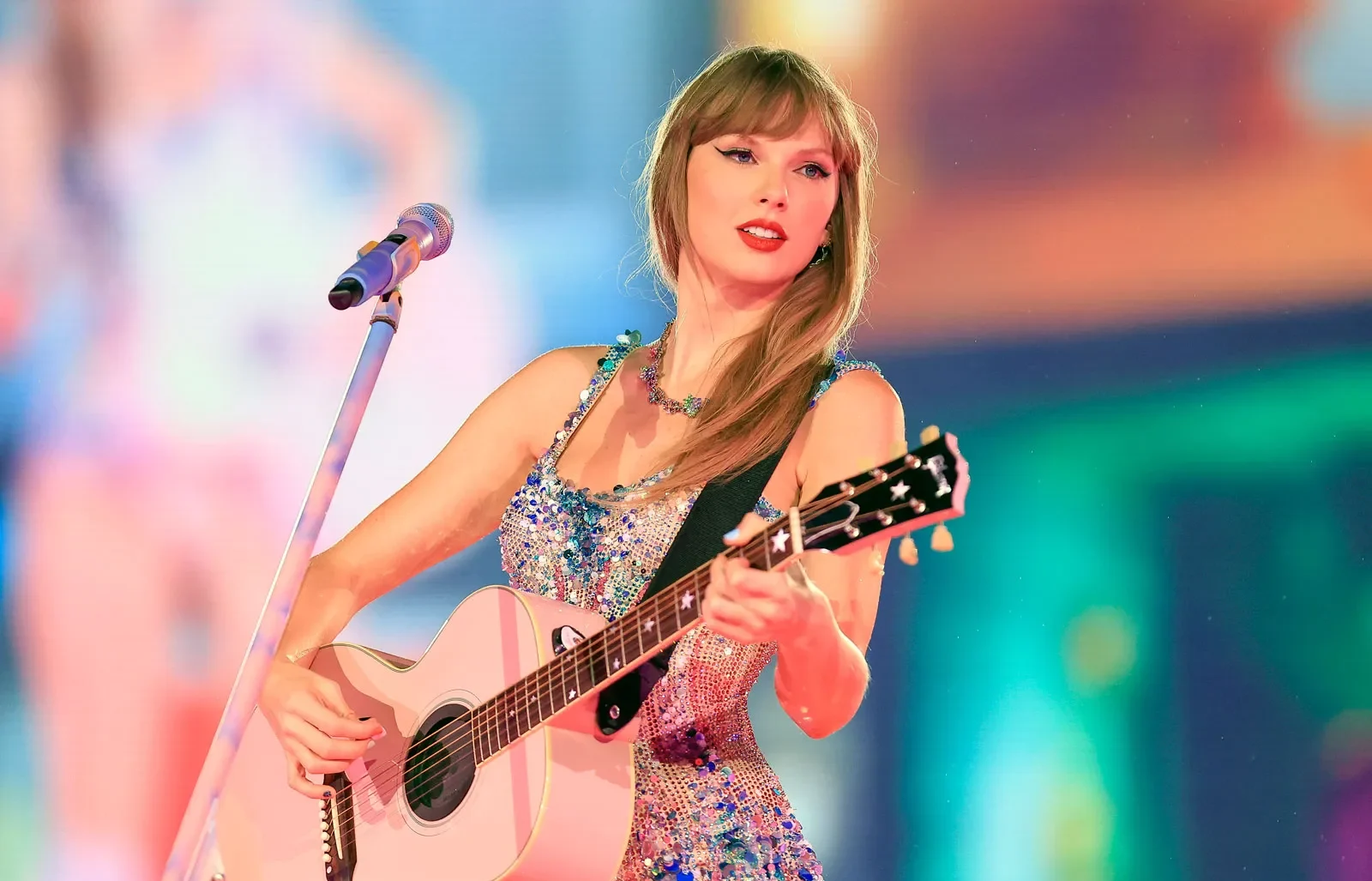
The re-recording project that followed — releasing “Taylor’s Version” albums to regain ownership of her masters — became its own chapter, turning a music-industry ownership dispute into some of the best-covered pop culture stories of the early 2020s. Midnights (2022) and the Eras Tour that followed folded every previous version of Swift into one show, which is part of why the tour became a genuine cultural and economic event rather than just a concert series.
Read as a whole, Swift’s timeline is really a study in reinvention as a career strategy: each era has a distinct sound, visual identity, and press cycle, and each one is legible on its own even to someone who skipped the ones before it. That’s a rarer skill than it looks, and it’s the reason her catalog keeps finding new listeners rather than aging into nostalgia.