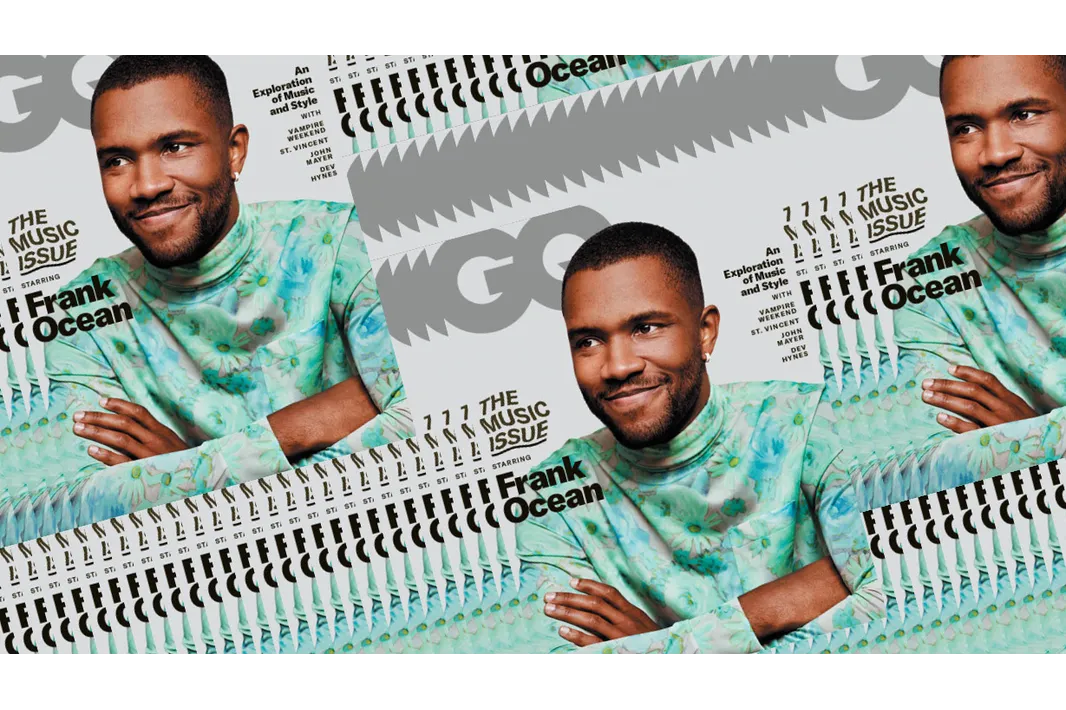
Frank Ocean’s relationship with the press is defined almost entirely by absence: he’s given only a handful of substantial interviews since Channel Orange in 2012, which has made each one disproportionately scrutinized whenever it happens. His 2016 Tumblr post accompanying Blonde’s release, along with a rare New York Times interview around the same period, remain some of the most-cited sources for understanding his creative process, in which he described his songwriting as circling specific memories rather than building around a single narrative arc.
His 2016 open letter, published on Tumblr before Channel Orange’s release, in which he wrote about a same-sex relationship, remains one of the most discussed pieces of writing by any R&B artist of his generation — notable partly because he chose to publish it himself rather than deliver it through a traditional interview, keeping control over exactly how his words were framed.
Interviewers who have spoken with him have consistently noted his reluctance to explain his lyrics directly, preferring to let songs remain somewhat open to interpretation rather than pinning down a single meaning. That reticence extends to his personal life broadly; even profiles built around access to him tend to focus more on atmosphere and observation than direct quotes, simply because he gives so few of them.
The scarcity itself has become part of his public identity: in an industry where constant availability is often treated as a career requirement, his near-total media silence between albums has, if anything, deepened the interest in whatever he eventually does say.