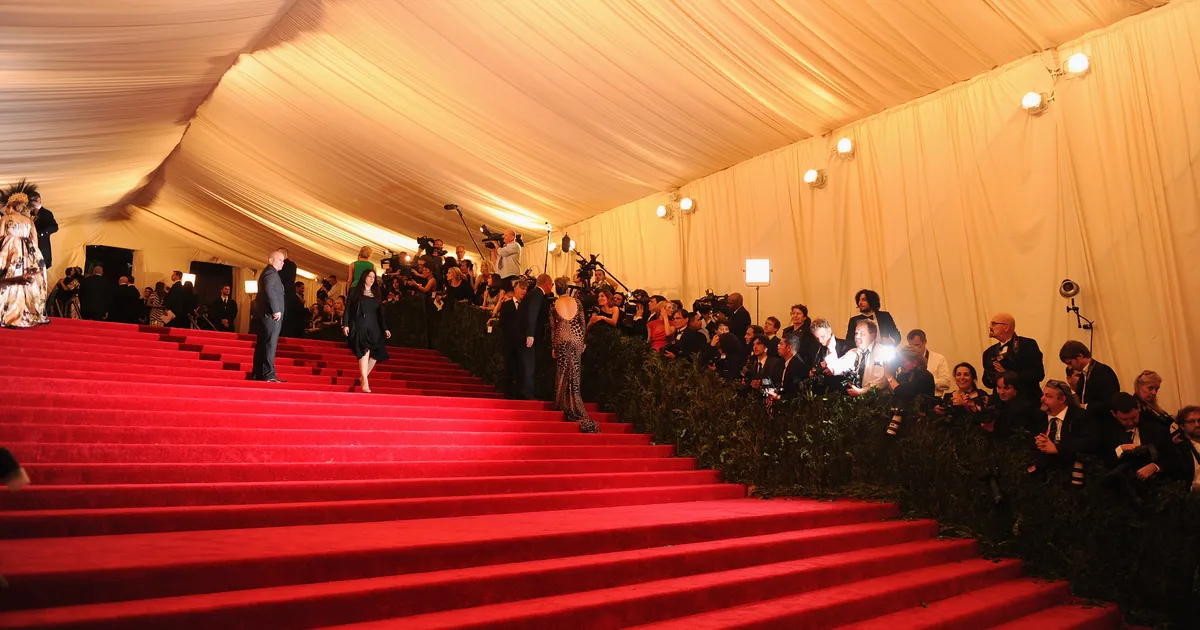
The Met Gala’s theme-driven format has made it one of the few red carpets where musicians are actively encouraged to work with designers on genuinely conceptual, rather than simply flattering, looks — which is why so many of the event’s most memorable music moments are remembered by designer as much as by wearer. Rihanna’s canary-yellow Guo Pei gown at the 2015 “China: Through the Looking Glass” gala remains one of the most referenced examples: a custom, fur-trimmed cape gown so large it required assistance to navigate the stairs, and one that instantly overshadowed most of the rest of that year’s carpet.
Lady Gaga’s 2019 “Camp” look, a Brandon Maxwell creation unveiled in four separate stages on the carpet itself, turned the red-carpet walk into a live performance rather than a single photograph — an approach to Met Gala dressing that treated the arrival itself as the art piece. Cardi B’s design collaborations with Thom Browne, meanwhile, have consistently pushed toward architectural, exaggerated silhouettes that read as fashion statements first and celebrity dressing second.
Billie Eilish’s black Oscar de la Renta gown for the 2021 gala marked a deliberate departure from her usual oversized streetwear silhouette, and the choice to work with a house associated with old-Hollywood glamour was widely read as a considered visual statement about her own evolving public image. Harry Styles’ sheer Gucci look from the same year, designed with longtime collaborator Alessandro Michele, became one of the most discussed examples of a male artist using the Met Gala to push gender-fluid fashion into the mainstream conversation.
Across these examples, the pattern holds: the Met Gala looks that stay in circulation years later are rarely the safest choices, but the ones where a specific designer partnership produced something genuinely surprising.