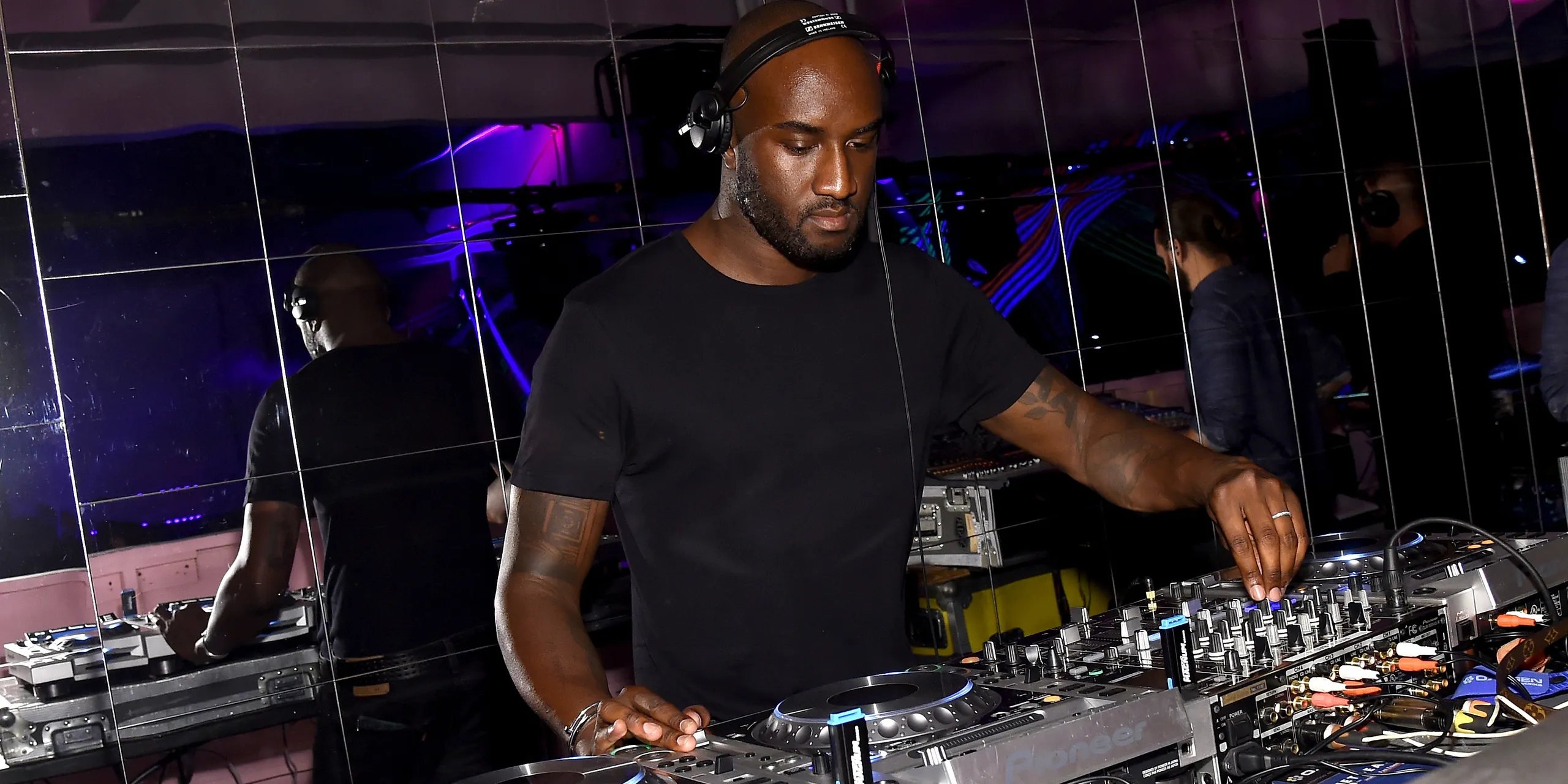
Virgil Abloh’s career started at the intersection of music and design rather than moving from one to the other: he worked closely with Kanye West as a creative consultant on projects including Watch the Throne well before launching Off-White in 2013, and that dual background shaped everything he did afterward. Off-White’s early success came specifically from applying streetwear’s DIY, remix-driven sensibility — quotation marks around plain object names, deliberately unfinished-looking construction details — to pieces that carried luxury pricing, a combination that hadn’t been executed at that scale before.
His 2018 appointment as Artistic Director of Louis Vuitton’s menswear was a genuine landmark: the first Black American to hold that role at a major French luxury house, and a hire widely read as an acknowledgment that streetwear and hip-hop culture, long treated as separate from high fashion, were now central to it. His collections at Vuitton continued to draw explicitly from music and youth culture references rather than softening them for a more traditional luxury audience.
Beyond his own labels, his influence shows up throughout the broader relationship between music and fashion that followed: the normalization of musicians serving as genuine creative collaborators on collections, rather than just brand ambassadors wearing the clothes, owes a great deal to the template he built. Designers and musicians who worked directly with him, including several who have discussed his mentorship publicly, have pointed to his approach as reshaping how seriously the industry now takes cross-disciplinary creative work.
His death in 2021 prompted an outpouring from across both the music and fashion industries specifically because his career had made the boundary between them so much thinner than it had been before he started working across both.